
Understanding Carbon Fiber Areal Weight
Areal weight — measured in grams per square meter (g/m²) — is the single most important specification when selecting carbon fiber fabric for structural strengthening. It determines the design thickness per layer, the tensile capacity per layer, and how many layers you need to achieve the required strengthening ratio.
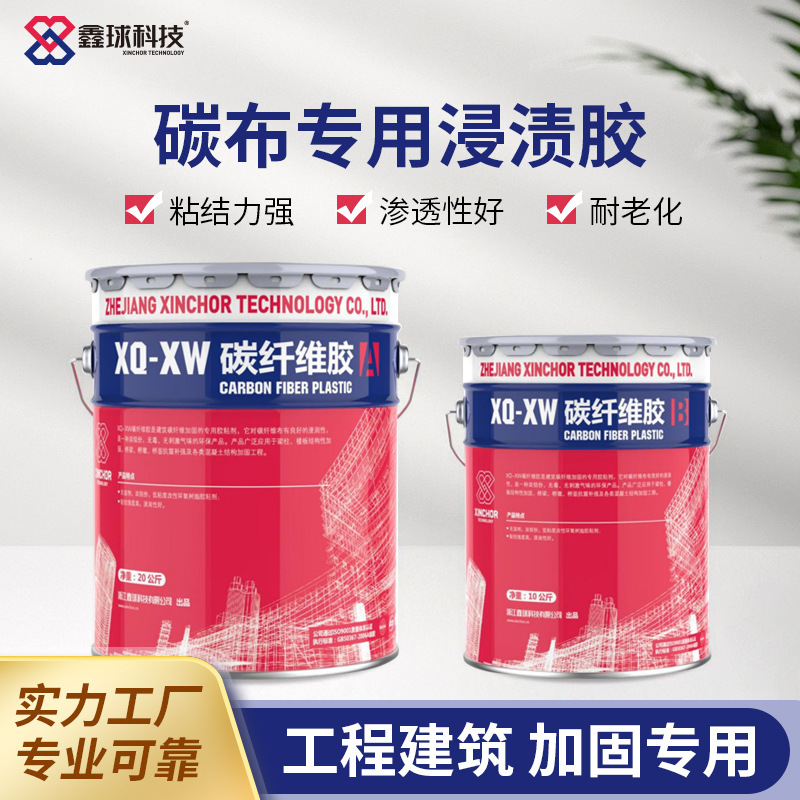
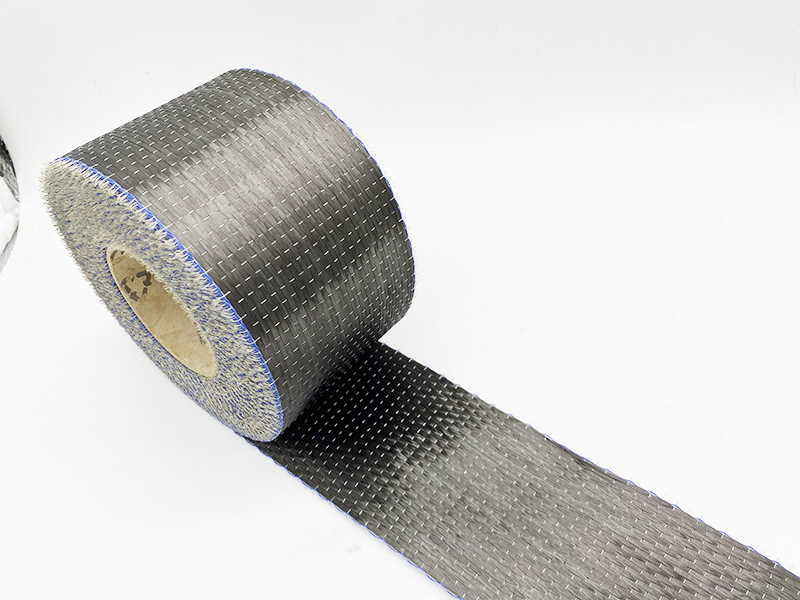
Our production line covers a full range from 200 g/m² to 600 g/m², all using 12K carbon fiber tow with tensile strength of 3,400 MPa or above and elastic modulus of 230 GPa or above. The fiber is the same — what changes is how much fiber is packed into each square meter.
Technical Comparison: 200g vs 300g vs 600g
| Property | 200 g/m² | 300 g/m² | 600 g/m² |
|---|---|---|---|
| Design Thickness | 0.111 mm | 0.167 mm | 0.333 mm |
| Tensile Strength | ≥ 3,400 MPa | ≥ 3,400 MPa | ≥ 3,800 MPa |
| Elastic Modulus | ≥ 230 GPa | ≥ 230 GPa | ≥ 230 GPa |
| Elongation at Break | ≥ 1.7% | ≥ 1.7% | ≥ 1.6% |
| Available Widths | 100–500 mm | 100–500 mm | 300–500 mm |
| Roll Length | 50 m or 100 m | 50 m or 100 m | 50 m |
| Drapeability | Excellent | Very Good | Good |
| Layers for 0.5mm Total | 5 layers | 3 layers | 1.5 layers (2) |
200g/m²: The Precision Workhorse
The 200 g/m² fabric is the most widely specified weight class globally. Its thin 0.111 mm design thickness makes it the most controllable option — engineers can fine-tune the strengthening ratio by adding layers in precise increments.
Best applications for 200 g/m²:- Single-layer flexural strengthening of slabs and beams where the design calls for 0.1 to 0.15 mm of CFRP thickness
- Complex geometries requiring excellent drapeability — the lighter fabric conforms better to curved columns, T-beam fillets, and irregular surfaces
- Heritage structures where minimal build-up thickness is critical for aesthetic reasons
- Projects where the design specifies a maximum of 2 layers
300g/m²: The Industry Standard
The 300 g/m² fabric is our highest-volume product, accounting for approximately 45 percent of our total carbon fiber fabric production. It represents the best balance between strengthening capacity per layer and workability.
 Best applications for 300 g/m²:
- Column confinement and seismic retrofit — two layers of 300 g/m² provide 0.334 mm total thickness, sufficient to increase column ductility by 50 percent or more
- Beam shear strengthening — U-wrapping with 300 g/m² fabric is the standard detail in most design codes
- Bridge pier strengthening where 2 to 3 layers are typically specified
- Large-area applications where labor efficiency matters
600g/m²: Maximum Efficiency for Heavy Infrastructure
The 600 g/m² fabric is our heaviest single-layer option. At 0.333 mm design thickness, one layer of 600 g/m² delivers the same CFRP thickness as three layers of 200 g/m² — cutting installation time by roughly 65 percent.
 Best applications for 600 g/m²:
- Large-span bridge girders requiring high total CFRP thickness
- Hydraulic dam reinforcement with large surface areas
- Heavy industrial structures (power plants, chemical plants) where downtime is expensive
- Projects where the design calls for 0.3 mm or more of CFRP thickness per layer
Cost Per Unit of Strengthening
The raw material cost per square meter increases with areal weight, but the cost per unit of CFRP thickness tells a different story:
| Weight | Price per m² (Relative) | Design Thickness | Cost per 0.1mm Thickness |
|---|---|---|---|
| 200 g/m² | 1.0× | 0.111 mm | 0.90× |
| 300 g/m² | 1.4× | 0.167 mm | 0.84× |
| 600 g/m² | 2.5× | 0.333 mm | 0.75× |
The 600 g/m² fabric is the most economical option per unit of strengthening when measured by material cost alone. But total project cost also includes labor, scaffolding, and resin — and the labor savings from fewer layers often make the heavier fabrics even more cost-effective in practice.
How to Specify: A Decision Flowchart
Start with your design thickness requirement:
If total CFRP thickness needed is less than 0.2 mm → Use 200 g/m² (1 or 2 layers). The thin build-up provides precise control. If total CFRP thickness is 0.2 mm to 0.5 mm → Use 300 g/m² (1 to 3 layers). Best balance of cost, labor, and performance. If total CFRP thickness exceeds 0.5 mm → Consider 600 g/m² (1 to 2 layers). Significant labor savings justify the higher material cost. If the surface is curved or irregular → Default to 200 g/m² or 300 g/m² regardless of thickness requirement. The 600 g/m² fabric does not drape well around tight curves.Quality Verification: What to Check on Arrival
When you receive carbon fiber fabric from any manufacturer, verify these parameters:
We include a batch test certificate with every roll shipped and can provide third-party test reports from SGS or TÜV on request.
Browse our full range of carbon fiber fabrics or request samples to evaluate the fabric quality yourself.