
What Is Polymer Modified Cementitious Mortar?
Polymer modified cementitious mortar (PMC mortar or polymer-cement mortar) is a composite material that combines Portland cement, graded aggregate, and a polymer modifier — either as a liquid latex emulsion or a redispersible powder — to produce a mortar with dramatically improved performance compared to conventional cement mortar.
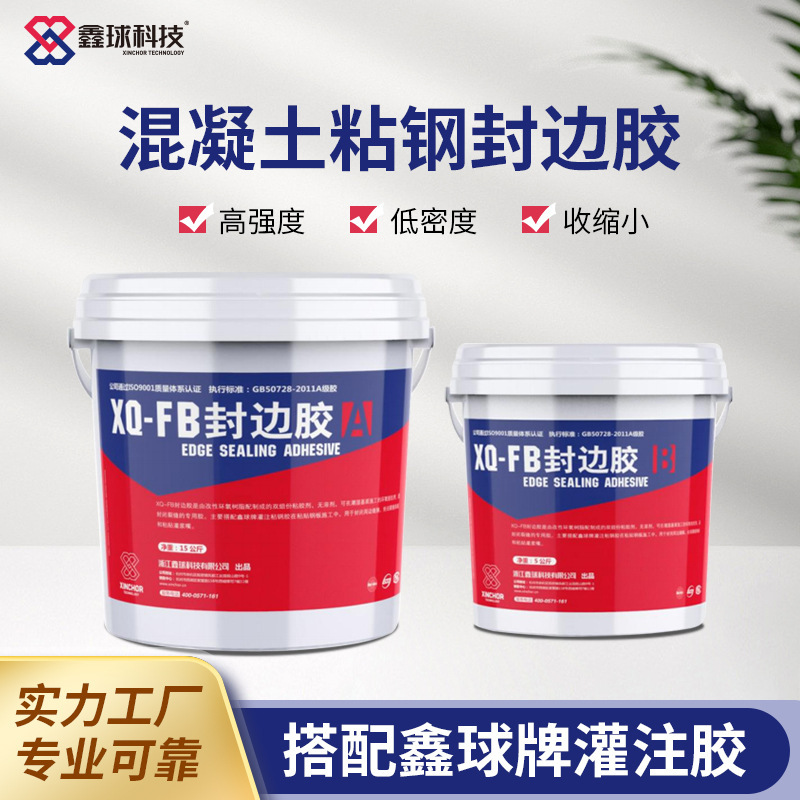
The polymer modification addresses the three fundamental weaknesses of plain cement mortar: low tensile and flexural strength, poor bond to existing substrates, and high permeability to water and chlorides. By forming a polymer film within the cement matrix, PMC mortar achieves flexural strength 3 to 5 times higher than unmodified mortar, bond strength sufficient to pass the concrete pull-off test (≥ 1.5 MPa with concrete failure mode), and water absorption reduced by 50 to 80%.
As a manufacturer producing PMC mortar systems for structural repair, waterproofing, and protective applications, we supply both pre-blended dry powder products (add water only) and two-component systems (powder + polymer liquid) to over 40 countries.
How Polymer Modification Works
In conventional cement mortar, the binder is hydrated cement paste — a network of calcium silicate hydrate (C-S-H) gel crystals. While strong in compression (20 to 60 MPa depending on water-cement ratio), this crystal structure is brittle, weak in tension (1 to 3 MPa), and full of capillary pores that allow water to penetrate.
When a polymer is added, two things happen during curing:
1. Cement hydration proceeds normally, forming the C-S-H crystal matrix. 2. Polymer film formation occurs simultaneously. As the mortar dries, the polymer particles (latex droplets or redispersed powder particles) coalesce to form a continuous organic film that:- Bridges microcracks in the cement matrix (increasing flexural and tensile strength)
- Lines and seals capillary pores (reducing water absorption)
- Creates a flexible bond layer at the substrate interface (increasing adhesion)
- Provides internal elasticity (reducing drying shrinkage cracking)
Types of Polymer Modifiers
| Polymer Type | Chemical Name | Form | Polymer-Cement Ratio (P/C) | Key Property | Common Application |
|---|---|---|---|---|---|
| SBR | Styrene-Butadiene Rubber | Liquid latex (48–50% solids) | 10–20% | Excellent water resistance | Waterproof mortar, bridge deck overlays |
| Acrylic | Acrylic copolymer | Liquid emulsion or powder | 8–15% | UV stability, good adhesion | External render, tile adhesive |
| VAE | Vinyl Acetate-Ethylene | Redispersible powder | 5–12% | Good flexibility, low cost | Pre-blended repair mortar, skim coat |
| Epoxy | Epoxy resin | Liquid (2-component) | 15–30% | Highest strength, chemical resistance | Chemical-resistant flooring, aggressive environments |
| PAE | Polyacrylic Ester | Redispersible powder | 8–15% | High flexibility, low VOC | Flexible waterproofing membranes |
SBR Polymer Mortar: The Workhorse
SBR (Styrene-Butadiene Rubber) latex is the most widely used polymer modifier for construction mortar worldwide. At a polymer-cement ratio of 15%, SBR mortar achieves:
- Compressive strength: 35 to 50 MPa (28-day)
- Flexural strength: 8 to 15 MPa (vs. 3 to 5 MPa for plain mortar)
- Bond strength to concrete: ≥ 2.0 MPa (pull-off, concrete failure mode)
- Water absorption: 2 to 4% (vs. 8 to 12% for plain mortar)
- Chloride permeability: reduced by 60 to 80% vs. unmodified mortar
Performance Data: Polymer Modified vs. Unmodified Mortar
| Property | Unmodified Cement Mortar (1:3 mix) | PMC Mortar (15% SBR, 1:3 mix) | Improvement |
|---|---|---|---|
| Compressive strength (28d) | 25–35 MPa | 35–50 MPa | +40–50% |
| Flexural strength (28d) | 3–5 MPa | 8–15 MPa | +200–300% |
| Tensile bond strength | 0.5–1.0 MPa | 2.0–3.5 MPa | +250–400% |
| Water absorption (24h immersion) | 8–12% | 2–4% | -70% |
| Drying shrinkage (90d) | 800–1200 microstrain | 400–700 microstrain | -40–45% |
| Freeze-thaw resistance (300 cycles) | Surface scaling, spalling | No significant damage | Dramatically improved |
| Abrasion resistance (Böhme test) | 15–20 cm³ loss | 5–8 cm³ loss | -55–60% |
| Chloride diffusion coefficient | 15–25 × 10⁻¹² m²/s | 3–6 × 10⁻¹² m²/s | -75% |
These performance improvements come with minimal cost increase — the polymer modifier typically adds 15 to 25% to the material cost of the mortar, but the durability improvement extends the service life by a factor of 3 to 5, making PMC mortar far more cost-effective on a life-cycle basis.
Our Polymer Modified Mortar Products
XQ-PM (Standard Polymer Mortar)
Our pre-blended polymer modified repair mortar for general concrete repair and protection:
| Property | Specification | Test Standard |
|---|---|---|
| Compressive strength (28d) | ≥ 45 MPa | EN 12190 |
| Flexural strength (28d) | ≥ 10 MPa | EN 196-1 |
| Bond strength (pull-off) | ≥ 2.0 MPa (concrete failure) | EN 1542 |
| Shrinkage (28d) | ≤ 0.08% | — |
| Application thickness | 5–30 mm per layer | — |
| Setting time | 4–6 hours | — |
| Packaging | 25 kg bags (add water only) | — |
| Classification | EN 1504-3, Class R3 | — |
XQ-PM-AC (Acrylic Modified Mortar)
Modified with acrylic polymer for superior UV resistance and weathering performance in exterior applications:
- Compressive strength: ≥ 40 MPa
- Bond strength: ≥ 2.0 MPa
- UV resistance: no yellowing after 2,000 hours accelerated weathering (QUV-A)
- Application: external render, architectural concrete repair, exposed structural repair
XQ-PM-EP (Epoxy Modified Mortar)
Our highest-performance PMC mortar, modified with epoxy resin for applications requiring maximum strength and chemical resistance:
- Compressive strength: ≥ 70 MPa
- Flexural strength: ≥ 20 MPa
- Bond strength: ≥ 3.0 MPa
- Chemical resistance: pH 3 to 14
- Application: chemical plant floors, sewage treatment structures, aggressive industrial environments
Mix Design Parameters
For contractors mixing polymer mortar on site using our liquid polymer emulsion + OPC + sand:
| Parameter | Recommended Range | Effect of Increasing |
|---|---|---|
| Polymer-cement ratio (P/C) | 10–20% (by weight of solids to cement) | Higher flexural strength, better bond, higher cost |
| Water-cement ratio (W/C) | 0.35–0.45 | Higher workability but lower strength |
| Sand-cement ratio (S/C) | 2.0–3.5 | Higher shrinkage resistance but lower strength |
| Aggregate grading | 0–2 mm (fine mortar) or 0–5 mm (coarse) | Coarser = less shrinkage, thicker application |
Application Methods
Hand Application (Troweling)
For repair patches up to 30 mm thick per layer:
Spray Application (Shotcrete)
For large-area repairs (bridge soffits, retaining walls, tunnels):
- Use a dry-mix or wet-mix spray gun calibrated for polymer mortar
- Spray in layers of 20 to 30 mm, allowing each layer to firm up before the next
- PMC mortar builds up faster than conventional shotcrete due to lower rebound (10 to 15% vs. 25 to 35%)
- Finish with a hand float or leave as-sprayed if texture is acceptable
Pourable/Self-Leveling Application
For floor repair and overlays:
- Increase the polymer content to 18 to 20% and add a superplasticizer
- Pour into formed areas and allow to self-level
- Minimum thickness: 10 mm for foot traffic, 25 mm for vehicle traffic
Curing Requirements
This is where most contractors make mistakes. PMC mortar requires a different curing regime than conventional mortar: Initial curing (0 to 24 hours): Keep the surface moist — cover with polyethylene sheet or mist spray. This allows cement hydration to proceed normally. Dry curing (24 hours to 7 days): Remove the covering and allow the mortar to dry. This is essential for polymer film formation — the polymer particles need to coalesce, which only happens when the water evaporates. Continuous wet curing (as for conventional concrete) prevents film formation and results in a weak, chalky mortar. Final cure: Full strength is achieved at 28 days (cement hydration + polymer film maturation).FAQ
Q: Can I use polymer mortar in continuously submerged conditions? A: SBR and acrylic polymer mortars perform well in water-immersed conditions after full cure (28 days dry curing minimum before submersion). For permanently submerged applications, ensure the polymer-cement ratio is at least 15% to achieve adequate water resistance. Our epoxy-modified mortar (XQ-PM-EP) is the best choice for aggressive water exposure (pH < 5 or chlorinated water). Q: What is the maximum application thickness for polymer mortar? A: Our standard PMC mortar can be applied in layers up to 30 mm thick. For deeper repairs (30 to 100 mm), apply in multiple layers, allowing each layer to firm up (approximately 2 to 4 hours) before the next. For repairs deeper than 100 mm, consider our high-strength repair mortar with coarser aggregate. Q: Does polymer mortar work in freezing temperatures? A: The minimum application temperature for our PMC mortar is 5°C. Below this, the polymer emulsion may freeze and break, destroying the film-forming capability. If overnight temperatures will drop below 0°C within the first 24 hours after application, protect the repair with insulation blankets. Our winter-grade formulation extends the minimum temperature to 0°C. Q: How do I match the color of polymer mortar to existing concrete? A: Our standard PMC mortar cures to a light gray color similar to ordinary Portland cement mortar. For color matching, we offer pigment additions (iron oxide for reddish tones, carbon black for darker shades). However, exact color matching to weathered concrete is difficult — we recommend applying a protective coating or paint over the repair if appearance is critical. Q: What is the difference between polymer modified mortar and polymer concrete? A: Polymer modified mortar uses cement as the primary binder, with polymer as a secondary modifier (P/C ratio 5 to 20%). Polymer concrete uses polymer resin as the sole binder — there is no cement. Polymer concrete has much higher chemical resistance and faster cure time but costs 5 to 10 times more than PMC mortar and requires specialized mixing equipment.Conclusion
Polymer modified cementitious mortar bridges the gap between ordinary cement mortar and high-performance epoxy systems. With 3 to 5 times the flexural strength, dramatically improved bond, and significantly reduced permeability — all at modest cost premium — PMC mortar is the material of choice for concrete repair, protection, and waterproofing applications worldwide.
View our polymer mortar product range or contact our technical team for mix design assistance and project recommendations.