
Concrete Repair Mortar Market Size: Six Estimates, One Direction
If you search for the size of this market, you will find at least six research firms quoting six different numbers. Here is how the most-cited ones line up:
| Source | 2025 market size | Forecast | CAGR |
|---|---|---|---|
| Mordor Intelligence | USD 2.52 billion | USD 3.5 billion by 2031 | 5.66% (2026–2031) |
| Market.us | USD 2.3 billion | USD 4.8 billion by 2035 | 7.6% (2026–2035) |
| Other published estimates (4 firms) | USD 2.6–3.31 billion | USD 4.9–5.0 billion by 2033–2034 | 5.6–7.9% |
The spread between the lowest and highest 2025 figure is about 44%. That is not unusual for a specialty construction chemical, and it does not mean one report is wrong. The numbers differ because the reports measure different things:
- Scope of chemistry. Some count only cementitious and polymer-modified cementitious (PMC) mortars. Others add epoxy mortars, which sell at 6–10× the price per kilogram, so a small shift in scope moves the total a lot.
- What counts as "mortar". Flowable repair grouts, bonding primers, and rebar corrosion-protection slurries are sold in the same systems. Whether they are inside or outside the boundary changes the figure.
- Price basis. A 25 kg bag of R4 mortar sells for roughly USD 11–20 FOB from China and USD 40–80 at a Western distributor counter. Reports that value China's domestic volume at local prices produce much smaller numbers than those that apply global average prices.
Where the Demand Comes From: Types, End Uses and Regions
The segment data is more useful than the headline number, because it tells you which products the market is actually buying.
| Segment | Mordor Intelligence (2025) | Market.us (2025) | What it means for a buyer |
|---|---|---|---|
| Leading chemistry | Cementitious 70.65% | Polymer-modified cementitious 65.4% | Bagged PMC mortar is the volume product; plan stock around it |
| Largest end use | Infrastructure 46.69% | Building & car parks 40.9% | Public bridges, tunnels and parking structures drive tenders |
| Application method | Spraying 61.44% | Hand/troweling 45.6% | Sprayable grades matter for large jobs; hand-applied grades for small patches |
| Grade | — | Structural 70.2% | Most spend is on load-bearing repair (EN 1504-3 R3/R4), not cosmetic patching |
| Largest region | Asia-Pacific 37.65% (fastest, 6.32% CAGR) | Asia-Pacific 41.2% | Growth is strongest where infrastructure is newest and least maintained |
Two points stand out from where we sit as a manufacturer.
First, structural grades dominate. In EN 1504-3 terms, class R4 requires compressive strength of at least 45 MPa and adhesive bond of at least 2.0 MPa; class R3 requires at least 25 MPa and 1.5 MPa. Almost every tender we quote for bridges, wharves and car parks specifies R3 or R4, and many specify R4 by default even where R3 would do. That matters for price, as the table further down shows.
Second, the market is concentrated at the top and fragmented underneath. Mordor estimates that Sika, Saint-Gobain, MAPEI, ARDEX and Euclid Chemical together hold 45–50% of global revenue. The other half is served by regional producers and importers. That second half is where private-label and factory-direct supply compete.
For a detailed breakdown of the product classes themselves, see our concrete repair mortar types and strength guide and the polymer modified cementitious mortar properties guide.
Why "Underwater Concrete Market" Figures Are 50–70× Larger
Buyers who research marine repair often run into a second set of reports on the "underwater concrete market", and the numbers look strange next to the repair mortar figures:
| Source | Base-year value | Forecast | CAGR |
|---|---|---|---|
| IMARC Group | USD 184.6 billion (2024) | USD 256.2 billion by 2033 | 3.52% |
| Market Research Future | USD 111.3 billion (2024) | USD 189.5 billion by 2032 | 6.88% |
| Fortune Business Insights | — | USD 236.95 billion by 2034 | 3.54% |
A market that is 50–70 times the size of the entire repair mortar market cannot be specialty underwater grout. These figures only make sense if they include the full value of concrete placed in marine and offshore construction: new port berths, bridge foundations, offshore wind bases, and dams. The specialty materials that make underwater placement possible — anti-washout admixtures, underwater epoxy grouts, underwater repair mortars — are a small fraction of that value.
The practical takeaway: if you sell or specify underwater repair products, size your opportunity from the number of marine structures in your region that need repair, not from the headline "underwater concrete" figure. For the technical side, read our guides on underwater concrete placement and anti-washout mix design and underwater concrete repair methods, and see our underwater epoxy grouting mortar XQ-UW.
Pricing a repair tender or building a product range? Send us the specification or your target product list, and we will return a matched range with EN 1504-3 class, TDS and FOB pricing within one working day. Request a quote →What Drives Growth — and What Holds It Back
The reports agree on the drivers. What we add is how each one shows up in actual purchase orders.
| Factor | Evidence from the market | How it shows up in orders |
|---|---|---|
| Ageing infrastructure (driver) | About 42,000 US bridges rated in poor condition; similar backlogs in Europe, the Gulf and Southeast Asia | Tenders specify R4 mortar plus corrosion-inhibiting primer as a system, not a single bag |
| Public funding (driver) | Roughly USD 40 billion of dedicated bridge funding under the US Infrastructure Investment and Jobs Act | Larger, repeat orders with fixed specifications and longer approval cycles |
| Specification by standard (driver) | EN 1504, ACI 546R and ICRI 320.2R now referenced in most repair specifications | Buyers ask for third-party test reports before the first sample |
| Sprayed application (driver) | Spraying leads by method share at 61.44% (Mordor) | Rising demand for low-rebound, sprayable R4 grades |
| Raw-material volatility (restraint) | Cement, polymer powder and epoxy resin prices move independently | Quotes valid for 30 days instead of 90 |
| Applicator skill and site conditions (restraint) | Performance depends on substrate preparation and curing | More requests for method statements and on-site guidance |
| VOC and chemical rules (restraint) | Rules such as California SCAQMD Rule 1113 limit VOC in coatings and primers | Solvent-free epoxy primers replacing solvent-based ones |
The Price Side of the Market: 2026 FOB Price Bands
Market reports do not publish prices. Here are indicative FOB Ningbo prices from our factory for 2026, with the EN 1504-3 class each product is designed to meet. Use them as a sanity check on quotes, not as a firm offer.
| Product | EN 1504-3 class | Indicative FOB price | Price per 25 kg bag/set | MOQ | Lead time |
|---|---|---|---|---|---|
| General patching mortar | R2 | USD 0.25–0.40 /kg | USD 6–10 | 1,000 kg | 7–12 days |
| Polymer modified repair mortar | R3 | USD 0.30–0.55 /kg | USD 8–14 | 1,000 kg | 10–15 days |
| Structural repair mortar, high strength | R4 | USD 0.45–0.80 /kg | USD 11–20 | 1,000 kg | 10–15 days |
| Sprayable R4 mortar, low rebound | R4 | USD 0.55–0.90 /kg | USD 14–23 | 2,000 kg | 12–18 days |
| Rapid-set repair mortar (traffic in 2–4 h) | R3/R4 | USD 0.70–1.20 /kg | USD 18–30 | 1,000 kg | 12–18 days |
| Epoxy repair mortar | — (resin-based) | USD 2.80–4.50 /kg | USD 70–113 | 500 kg | 12–18 days |
| Underwater epoxy repair mortar | — (resin-based) | USD 4.50–7.80 /kg | USD 113–195 | 300 kg | 15–20 days |
For comparison, Mordor Intelligence notes branded epoxy repair systems selling above USD 15/kg in specialised Western applications. The gap between that figure and the FOB band above is the margin space that makes private label workable for distributors, provided the product is tested to the same standard.
Why two "R4" mortars can differ by 70% in price
Buyers often ask why one factory quotes USD 0.45/kg and another USD 0.78/kg for the same class. The answer is almost always in the formulation. Here is where the raw-material cost of a typical polymer-modified mortar sits:
| Component | Typical dosage by mass | Share of raw-material cost |
|---|---|---|
| Portland cement (42.5 grade, sometimes blended with CSA cement) | 30–40% | 15–20% |
| Graded quartz sand | 50–60% | 12–16% |
| Redispersible polymer powder (VAE) | 1.5–4% | 35–45% |
| Silica fume / supplementary binders | 2–5% | 4–8% |
| Admixtures (PCE superplasticizer, cellulose ether, defoamer, shrinkage reducer) | 0.5–1.5% | 15–22% |
| Fibres (PP or PVA) | 0.05–0.2% | 1–3% |
The polymer powder is 2–3% of the bag and nearly half the cost. It is also what gives a PMC mortar its bond strength, flexural strength and resistance to chloride ingress. When a quote is far below the band, the polymer powder is usually where the saving came from. Ask for the polymer content in writing, and test bond strength to EN 1542 on the delivered batch, not only the sample.
Our high-strength polymer mortar XQ-SJ is rated at ≥75 MPa compressive strength and ≥3 MPa bond, for structural spall repair on bridge piers and tunnel linings. The full polymer mortar range covers R3 to R4 and rapid-set grades.
Freight Math: Why Cementitious Mortar Is Regional and Epoxy Is Global
This is the part of the market that global reports skip, and it explains why the big brands build local plants for cementitious products but ship epoxy worldwide.
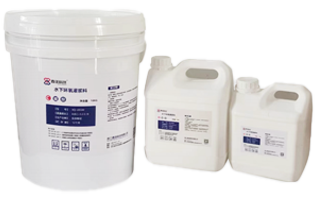
A 20 ft container carries about 21 tonnes of bagged cementitious mortar (840 bags on 21 pallets). It is weight-limited long before it is full. Epoxy repair mortar is classed as dangerous goods in most jurisdictions — amine hardeners typically ship as UN 2735 or UN 2922 — so loads are smaller and carry a DG surcharge.
Assume a sea-freight rate of USD 1,500 per 20 ft container for cementitious goods and USD 2,300 for DG cargo (substitute your own current quote):
| Product | FOB price | Load per 20 ft | FOB value per container | Freight per kg | Freight as % of FOB |
|---|---|---|---|---|---|
| R3 polymer modified mortar | USD 0.40 /kg | 21 t | USD 8,400 | USD 0.071 | ~18% |
| R4 structural mortar | USD 0.62 /kg | 21 t | USD 13,020 | USD 0.071 | ~12% |
| Epoxy repair mortar | USD 3.60 /kg | 18 t | USD 64,800 | USD 0.128 | ~3.5% |
For cheap cementitious grades, freight adds 12–18% before duty and inland delivery. For epoxy it adds under 4%. Three practical consequences:
- Import cementitious mortar only where the local alternative is expensive or does not exist. That covers much of Africa, the Gulf, Central Asia, parts of Latin America and the Pacific islands. In markets with several local PMC producers, imported R2/R3 bags rarely win on price alone.
- Import the higher-value products first. R4, sprayable, rapid-set and epoxy grades carry freight much better. Most of our distributor partners start with epoxy and R4 and add R3 once they have a container rhythm.
- Fill the container with a system. Mixing R4 mortar, bonding primer, crack injection resin and CFRP strengthening fabric in one container spreads the freight across higher-value lines and gives you a complete repair package to sell.
What This Means for Buyers in 2026
If you are a contractor, distributor or specifier planning purchases for the next 12–24 months, here is how we would read the market:
- Expect firm demand and firm prices. 5–8% growth combined with infrastructure-funded demand means no oversupply. Polymer powder and epoxy resin prices are the swing factors, so lock prices per order and keep quote validity short.
- Buy by EN 1504-3 class, not by brand name. Specifications increasingly name a class and a test standard. A factory product with independent R4 test reports can be approved as an equivalent — ask for EN 12190 (compressive strength), EN 1542 (bond) and EN 12617-4 (restrained shrinkage) results.
- Don't over-specify R4. Using R4 for non-structural cosmetic repairs adds 30–50% to material cost with no benefit. Keep R4 for load-bearing sections and use R3 elsewhere.
- Private label is viable above about 10 tonnes a year. Below that, custom bag printing (typically a 5,000-bag minimum per design) and separate test reports rarely pay back. Above it, the margin gap to branded products is large.
- Plan shelf life into ordering. Bagged PMC mortar keeps about 6–12 months in dry, sealed storage; epoxy systems keep 12–24 months. Size orders to what you will sell within six months in hot, humid markets.
Frequently Asked Questions
How big is the concrete repair mortar market?
Published estimates put it at USD 2.3–3.3 billion in 2025. Mordor Intelligence gives USD 2.52 billion, rising to USD 3.5 billion by 2031 at a 5.66% CAGR. Market.us gives USD 2.3 billion, rising to USD 4.8 billion by 2035 at 7.6%. The spread comes from different scopes (whether epoxy mortars and grouts are included) and different price bases.
Which region has the largest concrete repair mortar market?
Asia-Pacific, with a 37.65% share according to Mordor Intelligence and 41.2% according to Market.us. It is also the fastest-growing region, at about 6.3% a year, driven by bridge, tunnel and port infrastructure built over the past 30 years that is now entering its first major repair cycle.
What does concrete repair mortar cost per bag?
From a Chinese factory, FOB prices for a 25 kg bag run from about USD 6–10 for R2 patching mortar, USD 8–14 for R3 polymer modified mortar, and USD 11–20 for R4 structural mortar. Epoxy repair mortar costs about USD 70–113 per 25 kg set. Retail prices in Western markets are typically 3–5× higher.
Why is the underwater concrete market so much larger than the repair mortar market?
Underwater concrete reports (USD 111–185 billion in 2024) appear to count the full value of concrete placed in marine and offshore construction, including new ports, bridge foundations and offshore wind bases. Specialty underwater repair materials such as anti-washout admixtures and underwater epoxy grouts are only a small part of that total.
Is it worth importing concrete repair mortar from China?
For epoxy, R4, sprayable and rapid-set grades, usually yes — freight adds only 4–12% to the FOB price, and factory prices are well below branded equivalents. For basic R2/R3 bags, freight adds 12–18%, so importing pays mainly in markets without competitive local producers. Combining mortar with higher-value products such as injection resin and CFRP in one container improves the economics.
What certificates should an imported repair mortar have?
At minimum: ISO 9001 for the factory, a technical data sheet, an SDS, and third-party test reports showing EN 1504-3 class performance (EN 12190 compressive strength, EN 1542 bond, EN 12617-4 shrinkage) or ASTM C928 compliance for North American specifications. For EU projects, CE marking under EN 1504-3 is required.
---
Related Guides:- Concrete Repair Mortar: High Strength Types (30–75 MPa) and Structural Patch Repair
- Polymer Modified Cementitious Mortar: Strength Data and Mix Design
- High Strength Cement Repair Mortar: 45–75 MPa Grades
- Concrete Corrosion Repair: Rebar Corrosion, Spalling and Chloride Attack
- Underwater Concrete: Anti-Washout Mix Design and Tremie Placement
- Structural Adhesive Supplier: How to Qualify an Epoxy Manufacturer